
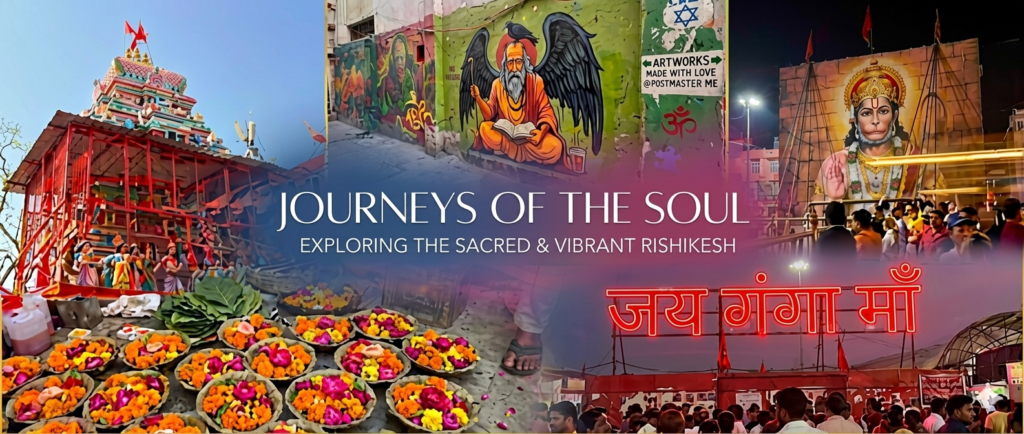
Some journeys are memorable because of the destination, while others stay with you because of everything that happens along the way. My two-day trip from Delhi to Rishikesh turned out to be both. It wasn’t just about visiting famous places—it was about experiencing the city’s rhythm, learning from unexpected situations, and discovering practical travel tips that I rarely found in other guides before leaving home.
We traveled overnight by electric bus, reached Rishikesh before sunrise, shared an auto with fellow travelers, negotiated a budget hotel after arrival, explored temples, waterfalls, and suspension bridges; got stuck in long traffic, walked kilometers when transport wasn’t available; enjoyed peaceful evenings beside the Ganga, and finally returned with countless memories and lessons that only a real trip can teach.
While planning this journey, I realized that many online travel guides focus only on attractions. They often skip the practical details that first-time visitors actually search for—where private buses drop passengers, how much local transport costs, whether app-based taxis are reliable, what mistakes waste time, how crowded different attractions get, and how to plan a smooth two-day itinerary without feeling exhausted.
Read More: Is SEO Still Worth It If AI Doesn’t Cite You?
That’s exactly why I decided to write this guide differently.
Every recommendation, opinion, and observation in this article comes from our own experience. I’ve shared actual transportation costs, accommodation details, food experiences, shopping tips, packing lessons, health observations, budgeting advice, photography suggestions, and hidden tips that genuinely helped us—or that I wish someone had told us before we started the trip.
During the planning stage, I also used my own India trip planner at ContentbyMayank to estimate transportation, accommodation, food, and miscellaneous expenses before making bookings. Having a rough budget in advance made decision-making much easier and avoided unnecessary surprises during the trip. If you’re planning your own Rishikesh visit, creating a simple budget and itinerary beforehand can save both money and time.
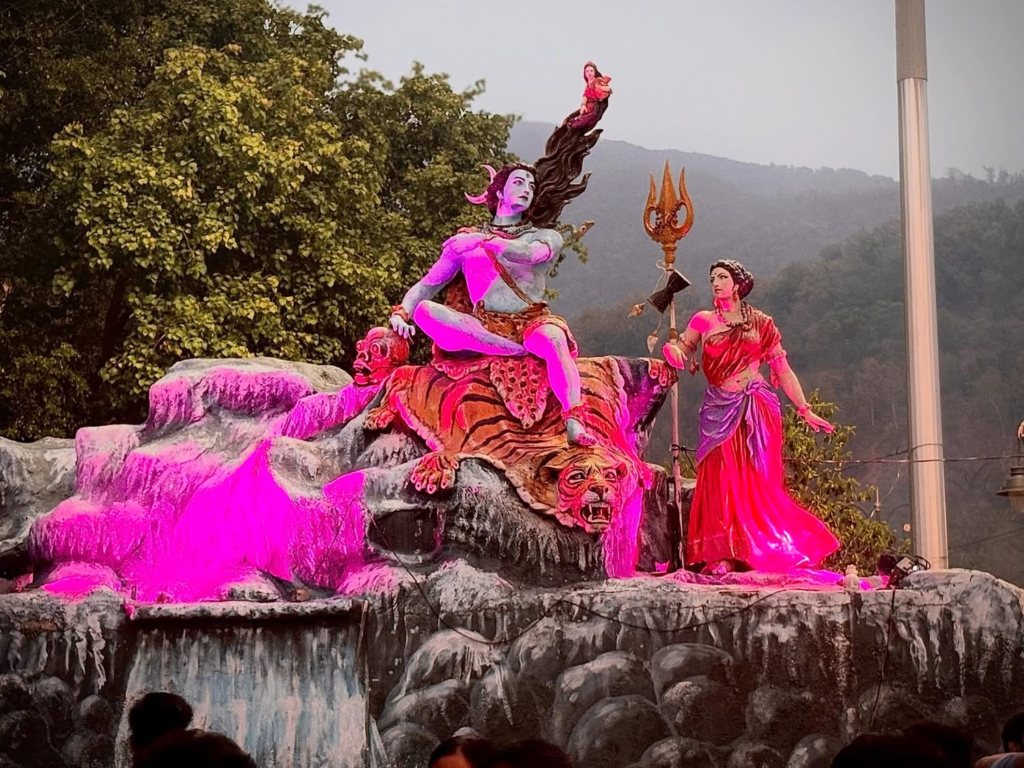
Is Rishikesh Worth Visiting?
Before answering that question, let me share one thing.
When people hear the name Rishikesh, they often think of only one identity. Some know it as the Yoga Capital of the World. Others associate it with river rafting, spiritual retreats, or the famous suspension bridges. After spending two days here, I realized that none of those descriptions fully capture what the city offers.
Rishikesh is a place where different travel styles naturally come together.
If you’re looking for spirituality, you’ll find peaceful temples like Neelkanth Mahadev Temple, the evening Ganga Aarti at Triveni Ghat, and countless smaller temples throughout the city. If you’re a nature lover, the surrounding hills, the flowing Ganga, waterfalls, and scenic viewpoints create experiences that photographs can never completely capture. Adventure seekers have access to river rafting, trekking, and camping around Shivpuri, while café lovers can spend hours overlooking the river from rooftop cafés in Tapovan and nearby areas.
What impressed me even more was the city’s overall atmosphere. Despite being one of India’s most visited destinations, we found Rishikesh surprisingly clean, welcoming, and vibrant. Yes, traffic can be frustrating during peak hours, but beyond that, the city offers something meaningful to almost every type of traveler.
If someone asked me whether Rishikesh is worth visiting, my answer would be simple:
Yes—but don’t visit with the goal of ticking off as many places as possible. Visit to experience the city. Slow down, start your mornings early, use local transport, walk whenever you can, and let Rishikesh reveal itself naturally.
Also Read: Delhi Prayagraj Varanasi trip: Our 4-Day Spiritual Journey
Why We Chose Rishikesh for Our 2-Day Trip
Weekend trips from Delhi often come with one big challenge—you spend so much time traveling that the destination barely gets enough attention. We wanted a place that was close enough to fit into a two-day itinerary while still offering a complete travel experience. Rishikesh stood out because it combines spirituality, nature, adventure, local markets, cafés, riverside walks, and mountain views, all within a relatively short distance from Delhi.
Our group consisted of five travellers—three males and two females, including my best friend. Since everyone had different interests, we wanted a destination that could keep everyone engaged without making the itinerary feel rushed. Instead of trying to cover dozens of attractions, we decided to focus on a handful of places and enjoy them properly.
Looking back, that decision made the trip much more satisfying than trying to tick every attraction off a checklist.
Planning the Trip: What We Did Before Booking Anything
Before booking our tickets, we decided on three things:
- Our total travel duration would be two days.
- We would travel overnight to avoid wasting daytime on the road.
- We wanted to keep the trip budget-friendly without compromising comfort.
This planning stage turned out to be more important than choosing the attractions themselves. Once we had a rough itinerary, booking transportation and estimating expenses became much easier.
One thing that helped me was preparing an approximate travel budget before making any bookings. Instead of guessing how much the trip might cost, I estimated transportation, accommodation, food, local travel, and miscellaneous expenses in advance. It gave us a realistic picture of the overall budget and helped us avoid unnecessary spending during the journey.
If you’re planning your own trip, I recommend doing the same. Even a rough budget can make your travel decisions much more confident. I used my own India Trip Planner to organize our itinerary and estimate expenses before finalizing the bookings. If you’re planning a trip to Rishikesh—or any destination in India—you can try it to get a personalized estimate based on your travel preferences.
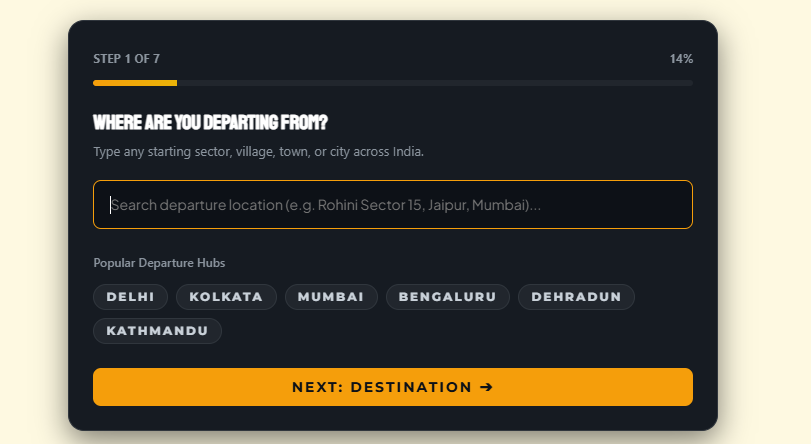
I recently used this India Trip Planner to plan my Rishikesh trip. If you’re planning your next journey, give it a try.
Our Complete Trip at a Glance
Before diving into the detailed itinerary, here’s a quick overview of our journey.
| Trip Detail | Information |
|---|---|
| Departure City | New Delhi (ISBT Kashmere Gate) |
| Destination | Rishikesh, Uttarakhand (Nepali Farm) |
| Travel Dates | 20 May – 22 May 2026 |
| Duration | 2 Days |
| Travellers | 5 |
| Trip Type | Friends & Family |
| Main Transport | Electric Bus |
| Return From | Haridwar (Shri Kashwshyap Ashram) |
| Accommodation | Budget Hotel in Tapovan |
| Main Attractions | Neelkanth Mahadev Temple, Neergarh Waterfall, Triveni Ghat, Janki Setu, Ram Jhula, Bajrang Setu Glass Bridge |
Complete Budget Breakdown
One of the most common questions travellers ask is, “How much does a two-day Rishikesh trip cost?” The answer depends on your travel style, but here’s what our trip looked like.
| Expense | Approximate Cost |
|---|---|
| Delhi → Rishikesh Bus | ₹2,643 |
| Haridwar → Delhi Bus | ₹2,619.80 |
| Hotel (5 people) | ₹2,300 |
| Food | ₹5,000–₹6,000 |
| Shared Local Transport | Based on route and usage |
| Shopping | Depends on personal purchases |
| Miscellaneous | Personal expenses |
How Much Does a 2-Day Rishikesh Trip from Delhi Cost?
Based on our actual trip, the main expenses for five travellers came to approximately ₹12,563–₹13,563 for the group, or around ₹2,513–₹2,713 per person. This includes our Delhi–Rishikesh bus, Haridwar–Delhi return bus, hotel stay, and estimated food expenses.
| Expense | Cost for 5 People |
|---|---|
| Delhi → Rishikesh bus | ₹2,643 |
| Hotel stay | ₹2,300 |
| Food | ₹5,000–₹6,000 |
| Haridwar → Delhi bus | ₹2,619.80 |
| Total | ₹12,562.80–₹13,562.80 |
| Approx. per person | ₹2,513–₹2,713 |
These figures are based on what we actually spent or estimated during our May 2026 trip. They do not include every miscellaneous expense, such as local autos, shopping, personal purchases, or optional activities, so you should keep some extra budget aside for those.
For a comfortable 2-day Rishikesh trip from Delhi, I would recommend keeping at least ₹3,000–₹4,000 per person as a practical starting budget, depending on your choice of transport, accommodation, food, and local travel.
Important: These figures are based on our own experience and may vary depending on travel dates, availability, seasonal demand, booking time and your travel preferences.
Was the Trip Worth the Money?
For us, absolutely.
The money wasn’t just spent on transportation or accommodation—it paid for experiences. Watching the sunrise after an overnight journey, standing on Janki Setu under the lights, taking a dip near Neergarh Waterfall, attending the evening Ganga Aarti, and finally reaching Neelkanth Mahadev Temple after the mountain drive made the overall cost feel worthwhile.
If I had to change one thing, I would probably allocate a slightly higher local transport budget to save time during peak traffic hours. Apart from that, I felt we managed to balance comfort, budget, and experiences quite well.
Delhi to Rishikesh Bus Journey: Our Honest Experience with Nuego & Ebus India
One of the best decisions we made for this trip was choosing an overnight electric bus instead of travelling during the day. It allowed us to save an entire day of sightseeing, avoid daytime highway traffic, and reach Rishikesh before sunrise when the weather was pleasant and the roads were relatively empty.
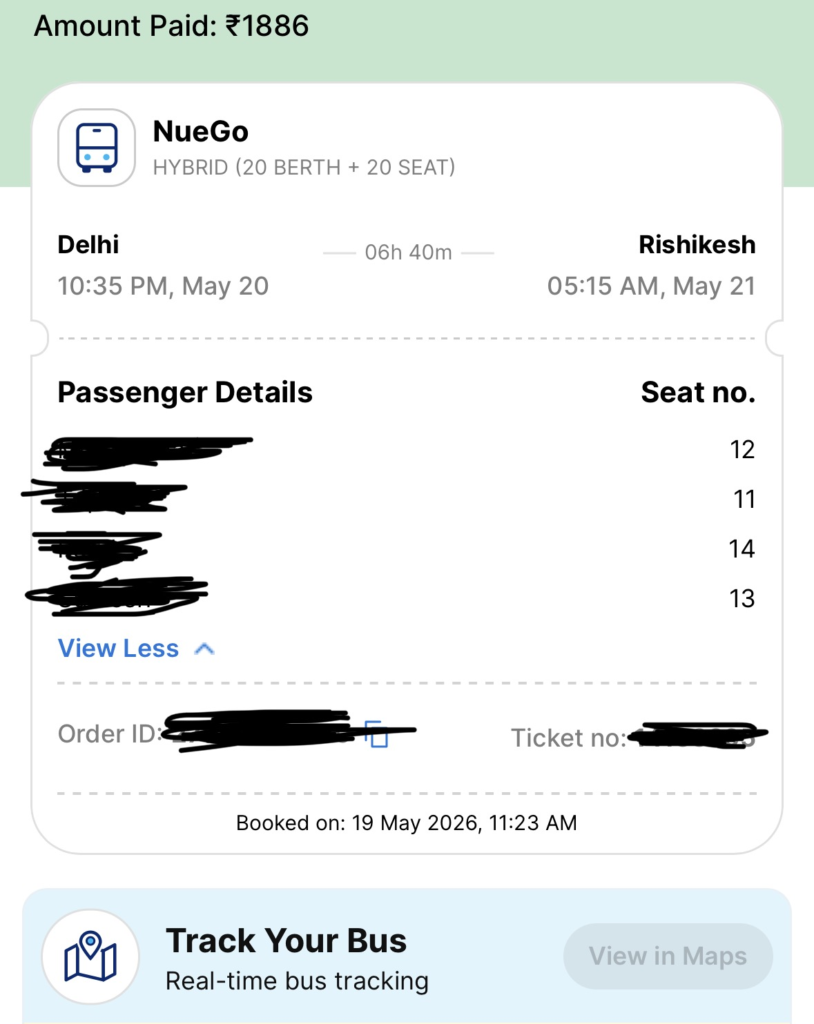
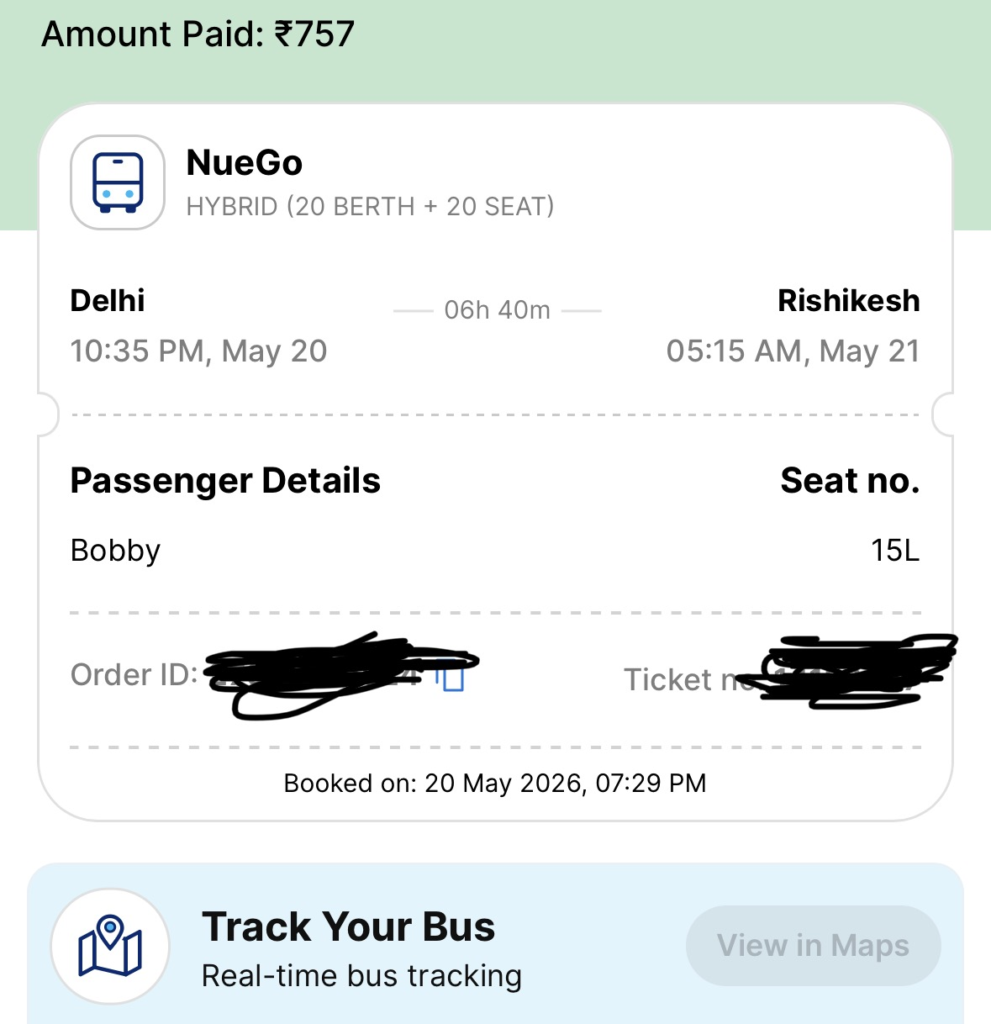
We booked our tickets through Paytm. Our onward journey from Delhi to Rishikesh was with Nuego, and our return from Haridwar to Delhi waswith Ebus India. This unintentionally allowed us to experience two popular operators on the same trip and compare them from a traveler’s perspective.
Boarding Experience at ISBT Kashmere Gate
We left home around 8:00 PM even though our bus departure was scheduled for 10:35 PM. Since we live in Rohini, reaching Kashmere Gate by Delhi Metro took around 20–25 minutes, excluding the short commute from home to the metro station. We intentionally reached ISBT around 9:00 PM to avoid last-minute stress.
If you’re traveling on a Thursday evening or during the weekend, expect ISBT Kashmere Gate to be crowded. The terminal remains busy with passengers traveling across North India, so arriving at least an hour before departure is prudent.
One interesting thing we noticed was that bus arrival order doesn’t always match departure timings. Some buses scheduled earlier than ours arrived later, while others with later departures reached the platform before ours. So don’t assume your bus will appear in chronological order—keep an eye on the display boards and operator updates.
Our Nuego bus arrived around 23 minutes behind schedule, which, in my opinion, was still reasonable. Considering that delays of 30–60 minutes are not uncommon for intercity buses, we didn’t find this concerning.
The Journey: Comfortable but Not Without Small Compromises
Our seating arrangement consisted of four semi-sleeper seats and one sleeper berth on the Delhi–Rishikesh route. Overall, the journey was smooth and comfortable.
Both Nuego and Ebus India provided the following:
- Easily accessible charging points
- Onboard washrooms
- Clean interiors
- Professional staff
- Comfortable seating for overnight travel
However, one small thing surprised us. Neither operator provided complimentary drinking water. While this wasn’t a major issue because we carried our own insulated water bottles, it’s something travellers should know beforehand.
Our insulated bottles kept the water chilled throughout the journey, and honestly, they turned out to be one of the most useful items we packed.
A Small but Important Tip About the Onboard Washroom
Yes, both buses had onboard washrooms, and that’s a valuable feature for overnight travel.
However, it’s important to understand their practical limitations.
These washrooms are primarily designed for urination. They are not suitable for extended toilet use. Many first-time travelers assume they can use them like regular washrooms, which may lead to discomfort or awkward situations during the journey.
My suggestion is simple: use a proper washroom before boarding whenever possible and treat the onboard facility as an emergency convenience rather than a complete replacement.
Safety and Comfort: Nuego vs Ebus India
Both operators felt safe, professionally managed, and suitable for families, couples, and solo travelers.
That said, one difference stood out.
In our experience, Ebus India felt slightly more spacious than Nuego. The additional aisle space made moving around the bus easier, which can be particularly useful during long journeys or in case of emergencies.
This doesn’t mean Nuego was uncomfortable—it wasn’t. But if I had to compare only on interior spaciousness, I would give Ebus India a slight edge.
Reaching Rishikesh Earlier Than Expected
One pleasant surprise was that we reached Nepali Farm almost one hour earlier than our scheduled arrival time.
The reason was simple: travelling overnight meant there was very little traffic on the highway.
This is one of the biggest advantages of choosing a night bus. Instead of spending valuable daytime hours on the road, you wake up close to your destination and can begin exploring early.
If possible, try to book buses that arrive around sunrise rather than midnight. Early morning arrivals usually make it easier to find shared autos, taxis and other local transport while also feeling safer than arriving in the middle of the night.
The Reality of the Nepali Farm Drop-Off
Most private buses do not drop passengers directly in Tapovan or near popular hotels. They usually stop at Nepali Farm, which is located on the main highway.
This is something many travel blogs fail to mention.
Since we arrived before sunrise, the surroundings were still dark. Although shared autos were readily available, I personally feel that solo travelers—especially those unfamiliar with the area—may find a highway drop-off less comfortable than arriving after daylight.
Fortunately, shared autos started filling up quickly, and within a short time we were on our way to Tapovan.
Our Overall Bus Experience
If I had to rate the journey, I would happily choose overnight electric buses again for a Delhi–Rishikesh trip.
The buses were comfortable, reasonably punctual, equipped with charging points and washrooms, and allowed us to maximise our time in Rishikesh instead of spending the day travelling.
The only improvements I would like to see are complimentary drinking water and slightly more spacious seating in some buses. Apart from these minor observations, the overall experience was smooth, convenient, and well worth the fare.
My Tip: If you’re traveling from Delhi, choose an overnight bus that reaches Rishikesh around sunrise, carry an insulated water bottle, keep your phone charged, and avoid relying on app-based taxis immediately after arrival. Shared autos are often the quickest and most economical option from Nepali Farm to Tapovan.
Day 1: From Delhi to Rishikesh – Overnight Journey, Temple Blessings & a Peaceful Evening by the Ganga
Our journey officially began at 8:00 PM when we left home in Rohini for ISBT Kashmere Gate. Although the bus departure was scheduled for 10:35 PM, we intentionally kept a good time buffer. Missing an intercity bus because of traffic or a metro delay simply wasn’t a risk we wanted to take.
After reaching ISBT around 9:00 PM, we waited near the boarding platform, watched buses arrive and depart, and finally boarded our Nuego electric bus. Despite arriving about 23 minutes late, the bus didn’t wait long after boarding. Within around 10 minutes, it started its journey towards Rishikesh.
That was the moment our trip truly began.
Arriving Before Sunrise at Nepali Farm
One of the biggest advantages of overnight travel became clear the next morning.
Instead of spending daylight hours on the highway, we reached Nepali Farm almost an hour earlier than scheduled because there was virtually no traffic during the night.
The surroundings were still dark, but shared autos were already available. These autos usually wait until enough passengers have gathered before starting the journey. Since our group already had five members, we didn’t have to wait too long for the remaining seats to fill.
The fare was ₹100 per person, and after around 30–40 minutes, we finally reached Tapovan.
If you’re travelling during busy daytime hours, the same route can easily take over an hour because of Rishikesh’s famous traffic congestion.
Checking Into Our Budget Hotel
Instead of booking online, we decided to search for accommodation after reaching Tapovan.
After asking a few local people, we found a spacious hotel near the SBI Bank branch in Tapovan. Negotiation played a huge role here. We managed to get a room for ₹2,300 for all five of us, including two extra mattresses.
The room wasn’t luxurious, but it offered exactly what we needed:
- Plenty of sleeping space
- A clean bathroom with geyser
- Wi-Fi
- Lift facility
- Helpful staff
- Comfortable environment for a short stay
Since we arrived early, the hotel also allowed us to check in around 7:00 AM, much earlier than the standard check-in time.
After taking a quick shower and freshening up, we were finally ready to begin exploring Rishikesh.
Starting the Day with Neelkanth Mahadev Temple
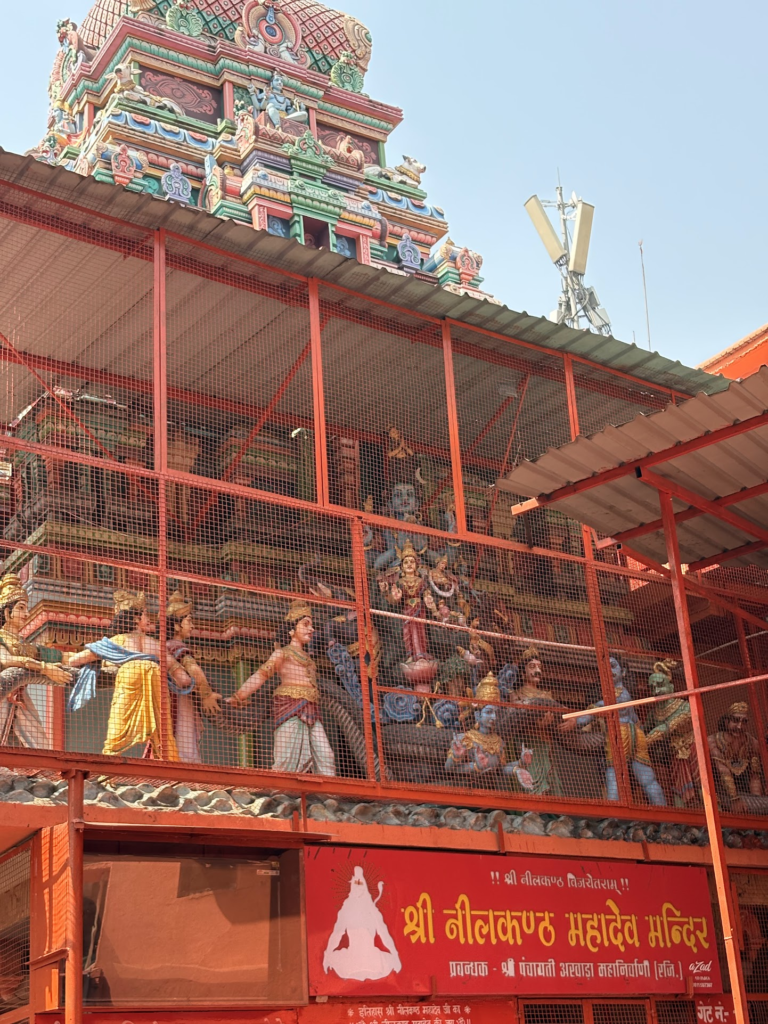
If there’s one decision I would recommend every first-time visitor to copy, it’s this:
Visit Neelkanth Mahadev Temple first thing in the morning.
Many tourists keep it for later in the day and end up facing long queues, heavier traffic and increasing temperatures. We did exactly the opposite, and it saved us hours.
From Tapovan, we walked to the shared taxi stand and hired a shared vehicle towards the temple. The mountain roads are scenic, but they also have continuous bends.
Unfortunately, this was the only health-related issue we faced during the trip.
One of my friends experienced motion sickness during the drive and vomited for a few minutes after reaching the temple. Looking back, we believe travelling on an empty stomach—with only coconut water beforehand—may have contributed to the discomfort.
Thankfully, after resting for a while and completing the darshan, she gradually felt much better.
It’s a reminder that even a simple breakfast before a winding mountain journey can make a big difference.
A View Worth Every Turn
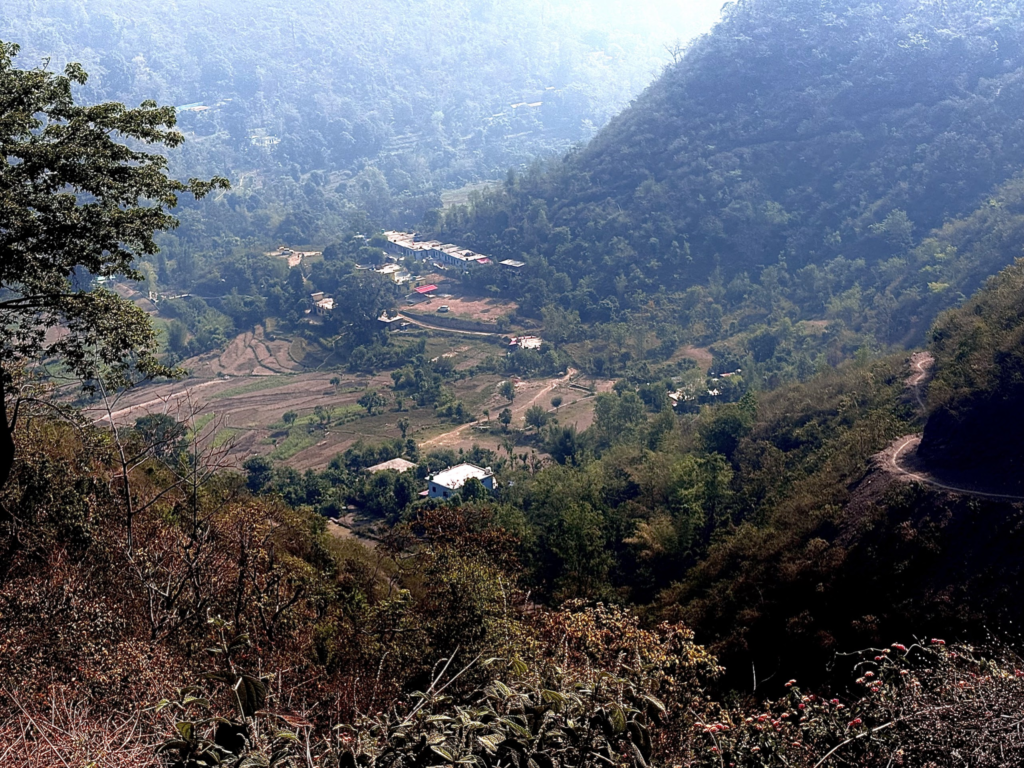
The moment we reached Neelkanth Mahadev Temple, every curve of the mountain road suddenly felt worth it.
Located amidst the hills of Pauri Garhwal, the temple offers an atmosphere that feels peaceful even before you step inside. The surrounding greenery, cool mountain air and panoramic views create an experience that goes far beyond a religious visit.
Since we arrived early, the crowd was manageable. We completed our darshan comfortably and spent time taking photographs while soaking in the scenery.
This was easily one of the highlights of our entire trip.
From Spirituality to Adventure: Neergarh Waterfall
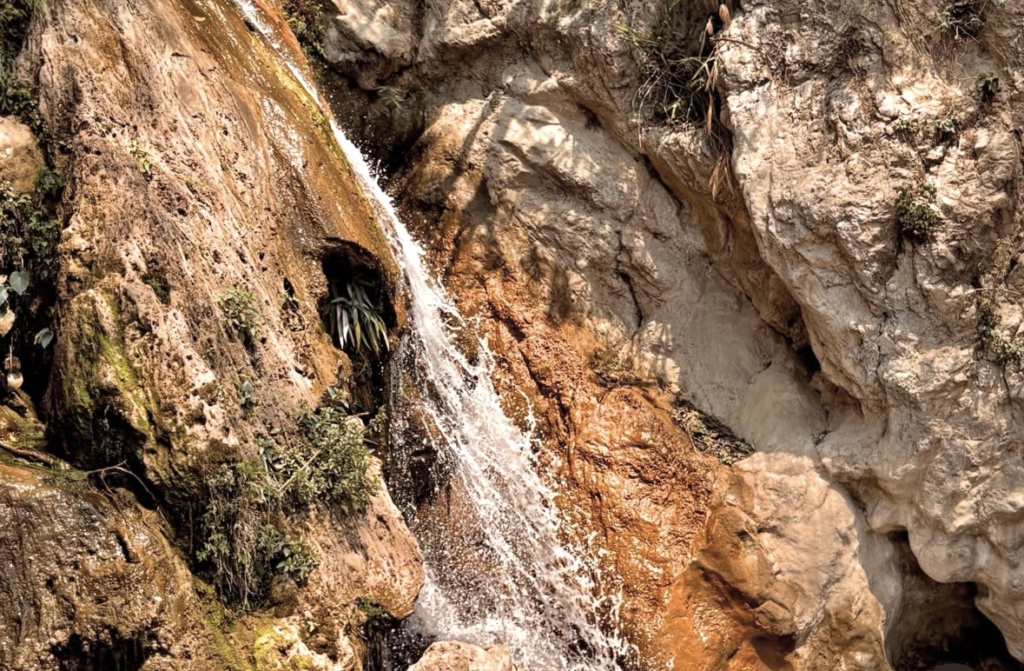
After completing our temple visit, we didn’t return directly to Tapovan. Instead, our shared cab included a stop at Neergarh Waterfall, one of Rishikesh’s most popular natural attractions.
The entry fee was ₹50 per person.
Unlike many waterfalls that require long treks, Neergarh offers multiple levels connected by a relatively manageable climb. The higher you go, the fewer people you’ll usually find, making it easier to enjoy the surroundings peacefully.
We spent nearly three hours here, relaxing by the water, taking photographs and simply enjoying the refreshing atmosphere.
One thing to remember is that food choices inside are limited. During our visit, Maggi was practically the only substantial meal available, so we happily embraced the classic mountain tradition of eating hot Maggi beside a waterfall.
Sometimes, that’s exactly what makes a trip memorable.
A Relaxing Lunch After a Busy Morning
After returning to our hotel and taking some rest, we ordered lunch.
Our meal included Shahi Paneer, Dal Makhani, naan, and fresh salads—simple North Indian food after an active morning.
It wasn’t the most extraordinary meal of the trip, but after several hours of travelling, temple visits and waterfall exploration, it felt incredibly satisfying.
Sometimes it’s not the restaurant that makes a meal memorable—it’s the day you’ve had before sitting down to eat.
Witnessing the Evening Ganga Aarti at Triveni Ghat
As sunset approached, we headed towards Triveni Ghat, one of the most spiritually significant places in Rishikesh.
The atmosphere began changing long before the Aarti started. Families gathered on the steps, devotees offered prayers, children fed the fish, and the sound of temple bells gradually replaced the usual city noise.
The crowd was enormous.
If you’re planning to attend the evening Ganga Aarti, I strongly recommend arriving at least one to one-and-a-half hours early if you want a good place to sit.
We spent around two hours here, simply watching the ceremony and absorbing the peaceful atmosphere. Before leaving, I also bought a small container for ₹20 to carry Ganga Jal home—a tradition many devotees follow as a symbol of purity and blessings.
A Peaceful Night at Janki Setu That Didn’t End the Way We Expected
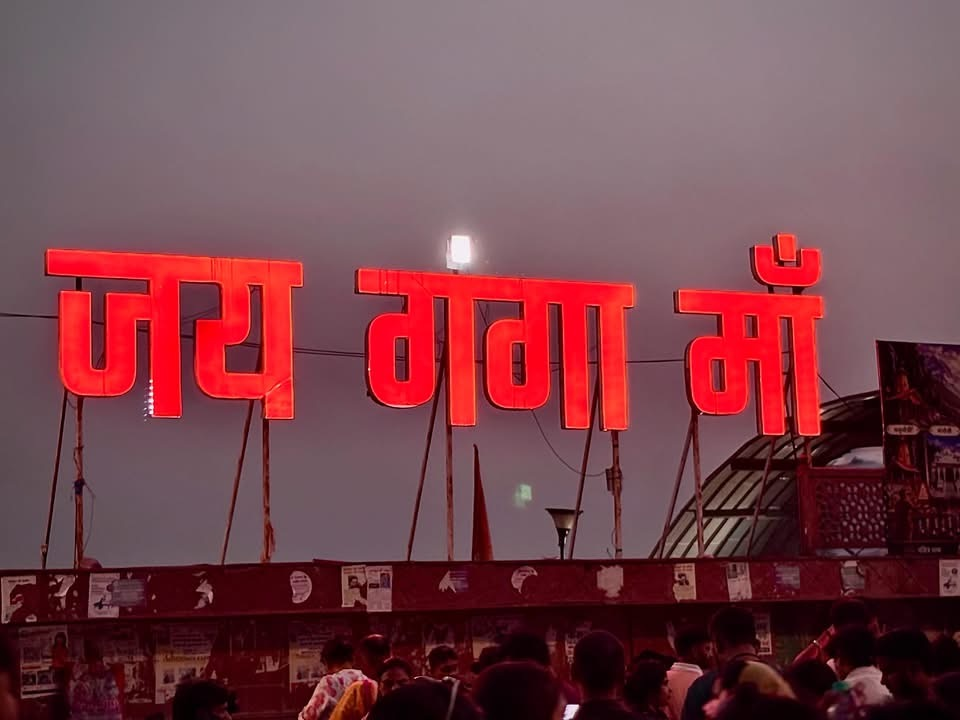
After attending the beautiful evening Ganga Aarti at Triveni Ghat, we headed towards Janki Setu.
If someone asks me today which place gave me the most peaceful feeling during the entire trip, my answer would be Janki Setu without any hesitation.
Unlike crowded tourist attractions where everyone seems to be rushing somewhere, Janki Setu encouraged us to slow down.
The cool breeze flowing over the Ganga, the beautifully illuminated bridge, reflections dancing on the river, and the calm atmosphere made it one of those places where you naturally stop looking at your phone and simply enjoy the surroundings.
We spent a long time walking across the bridge, talking, laughing, taking photographs and appreciating the city’s peaceful nightscape.
For me, this wasn’t just another bridge.
It became my favourite place in Rishikesh.
My Favourite Photograph of the Entire Trip
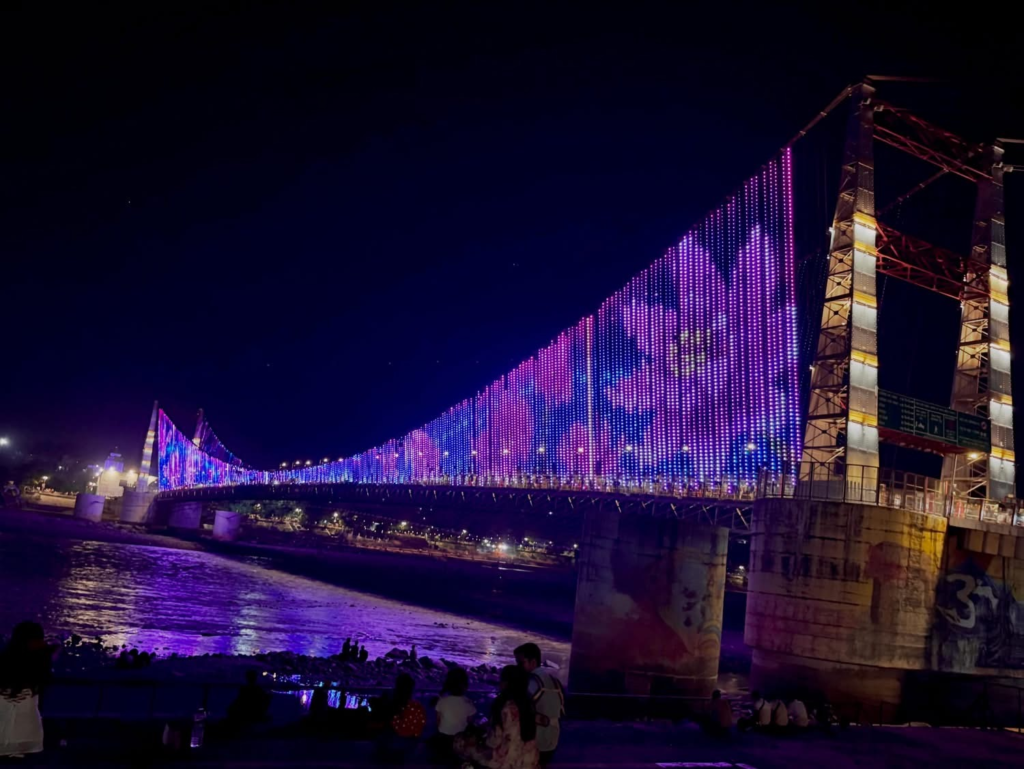
Out of hundreds of photographs we clicked during the journey, my favourite wasn’t taken at a temple or a waterfall.
It was taken at Janki Setu.
The combination of the bridge lights, the calm flow of Maa Ganga, and the peaceful atmosphere created a picture that immediately brings back memories every time I look at it.
Some photographs capture a location.
Others capture a feeling.
This one captured both.
Don’t Leave Janki Setu Too Late
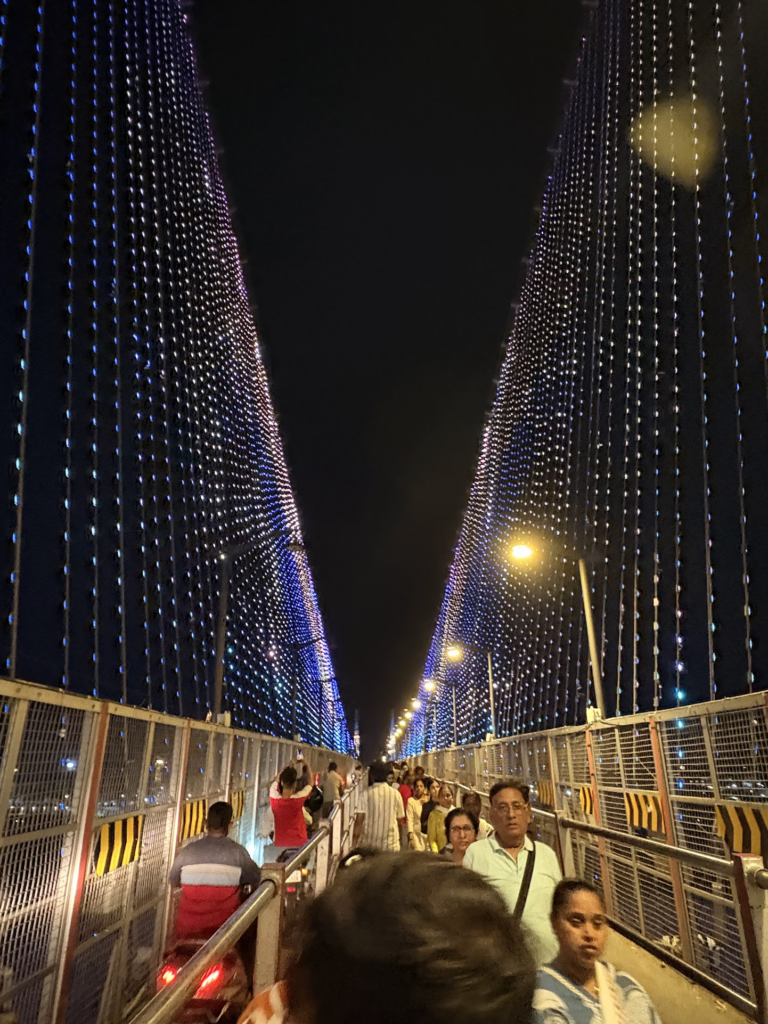
If you’re planning to spend your evening at Janki Setu, here’s one piece of advice I genuinely wish someone had given us.
Don’t wait until very late to leave.
By the time we decided to return to our hotel, traffic congestion had become so severe that almost no transport was willing to take passengers towards Tapovan.
We tried waiting.
We tried looking for autos.
We even considered app-based taxis.
Nothing worked.
Eventually, we had no choice but to start walking.
The Funniest Moment of Our Trip
Looking back today, it feels funny.
At that moment, it definitely didn’t.
Our group walked for almost an hour through traffic that barely seemed to move.
Despite covering only around 2–3 kilometers, it felt much longer because everyone was already tired after an entire day of sightseeing.
Every few minutes, someone would suggest sitting down for a break.
We laughed at our own situation, joked about whose idea it had been to stay so late, rested beside the roadside for a while, and then continued walking again.
Those unexpected moments often become the memories you remember the longest.
Eventually, after what felt like forever, we finally found a shared auto.
The driver charged us ₹250 to drop us near SBI Tapovan.
At that moment, none of us even thought about negotiating.
We were simply happy that the walk was finally over.
What We Learned That Night
That experience taught us two important lessons.
The first is that traffic in Rishikesh should never be underestimated, especially during weekends, holidays, and evenings.
The second is that if you’re planning to explore multiple places independently, renting a scooter can save an incredible amount of time.
For couples or small groups, a rental scooty isn’t just economical—it gives you flexibility that shared transport simply can’t.
If renting isn’t an option, then either leave popular attractions slightly earlier or keep a little extra budget for private transport.
Sometimes spending a few hundred rupees saves hours of unnecessary waiting.
Dinner Before Calling It a Day
Before heading back to the hotel, we had dinner at a South Indian restaurant near SBI Tapovan.
The food itself was fairly average in terms of taste.
However, the restaurant impressed us with its cleanliness, quick service and hygienic environment.
After such a long day, we weren’t searching for a luxury dining experience.
We simply wanted a hot meal and some rest before another early morning.
Back at the hotel, our conversations continued for a while.
Since it was a group trip with close friends and family, there was no shortage of jokes, stories and laughter.
Eventually, we went to sleep around 2:00 AM, knowing we had to wake up early again for the second day of our journey.
Day 1 Summary
Looking back, our first day in Rishikesh perfectly balanced spirituality, adventure and relaxation.
We travelled overnight from Delhi, reached before sunrise, explored Neelkanth Mahadev Temple, spent hours at Neergarh Waterfall, attended the evening Ganga Aarti, experienced the peaceful atmosphere of Janki Setu, learnt an important lesson about the city’s traffic, and ended the day with tired legs but unforgettable memories.
If someone asked me to describe Day 1 in one sentence, I’d say:
It was the kind of day that leaves you physically exhausted but mentally refreshed.
Can you cover Rishikesh in 2 days?
Yes, you can comfortably explore Rishikesh in two days if you plan your itinerary wisely. Instead of trying to visit every attraction, focus on a balanced schedule that includes spiritual sites like Neelkanth Mahadev Temple and Triveni Ghat, scenic places such as Neergarh Waterfall and Janki Setu, and enough free time to enjoy the city’s atmosphere. Starting your mornings early helps you avoid traffic, long queues, and extreme heat.
Day 2: Sunrise Views, Iconic Bridges, Shopping & Our Journey Back to Delhi
Even though we slept around 2:00 AM after a long and memorable first day, everyone managed to wake up by 7:00 AM. Since our hotel checkout was scheduled for 9:00 AM, we had just enough time to freshen up, pack our bags and plan the remaining hours in Rishikesh.
Instead of rushing, we decided to keep the morning relaxed. Looking back, it was the right decision because Day 2 wasn’t about squeezing in more places—it was about enjoying the places we visited.
Checking Out Without Ending the Experience
After packing our luggage, we checked out of the hotel around 9:00 AM. Rather than heading directly to Haridwar, we stored our luggage safely and planned a few final stops within Rishikesh.
We also had breakfast at a roadside tea stall that was much more than just a chai shop. It served fresh breakfast items, offered quick service and was a perfect place to begin the second day.
Sometimes these small local eateries leave a better impression than expensive restaurants because they become part of the journey itself.
Bajrang Setu – A Peaceful Start to the Morning
Our first stop was Bajrang Setu, one of the newer suspension bridges in Rishikesh.
Reaching there around 10:00 AM turned out to be a great decision.
Unlike the evening crowds we had experienced elsewhere, the bridge was surprisingly peaceful. We had enough space to walk comfortably, click photographs, and admire the beautiful surroundings without constantly waiting for crowds to clear.
One thing we noticed was that the glass viewing sections on both sides of the bridge were temporarily closed.
Locals informed us that repeated misuse by some visitors—such as dragging heavy luggage and trolleys over the glass panels—had caused damage, forcing authorities to restrict access until repairs were completed.
It was a reminder that tourism isn’t only about enjoying beautiful places—it’s also about respecting them.
If every visitor shows a little civic responsibility, everyone who comes later gets a better experience too.
Ram Jhula – The Landmark Every Visitor Recognises
No trip to Rishikesh feels complete without visiting Ram Jhula.
Unlike Bajrang Setu, Ram Jhula had significantly more visitors. People from all over the country walked across the bridge, paused to admire the flowing Ganga, and captured photographs with one of Rishikesh’s most recognizable landmarks in the background.
Standing on the bridge, you understand why it has become one of the city’s defining symbols.
The views are beautiful, the atmosphere is lively, and every direction offers something worth looking at.
If Bajrang Setu felt peaceful, Ram Jhula felt energetic.
Both offered completely different experiences.
My Suggestion for Visiting the Bridges
If you’re planning both bridges in a single day, I recommend this order:
- Visit Bajrang Setu early in the morning for peaceful photographs and fewer crowds.
- Visit Ram Jhula afterwards, when the city has fully come alive.
This simple change can improve your overall experience considerably.
Saying Goodbye to Rishikesh
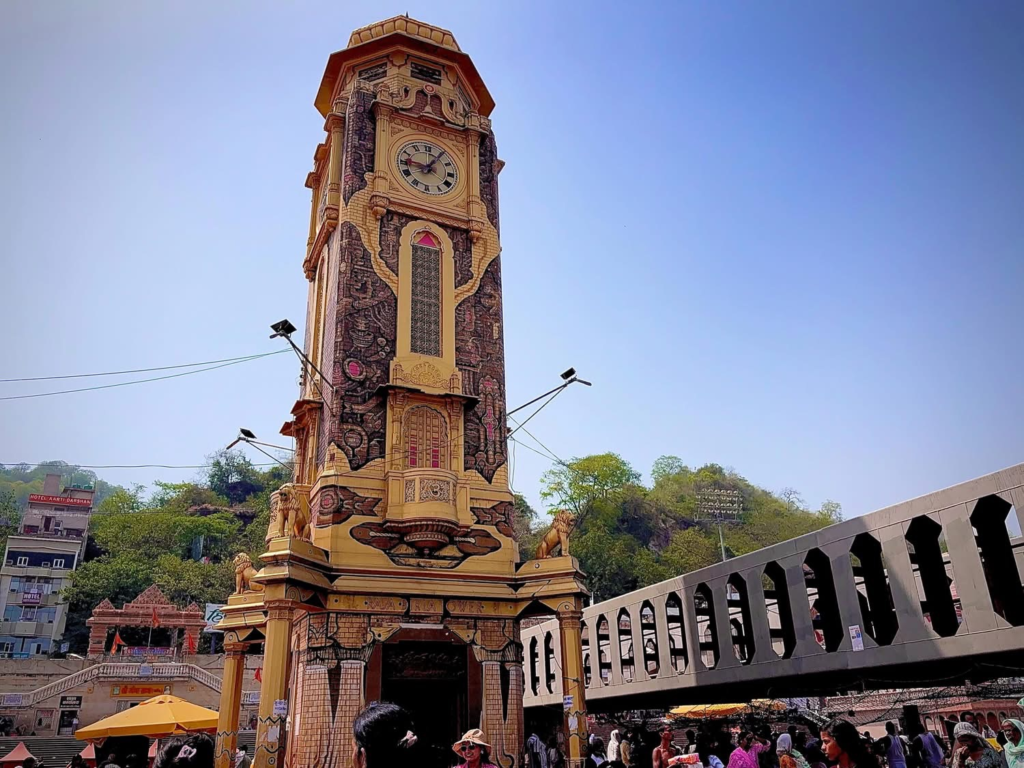
After completing our morning sightseeing, it was finally time to leave for Haridwar.
Instead of hiring a private taxi, we again chose shared local transport.
The shared auto charged ₹100 per person, although this time the vehicle waited until around 12 passengers had boarded before starting the journey.
If you don’t mind sharing space and waiting for a few extra minutes, shared transport is an excellent budget-friendly option.
However, if you’re travelling with elderly family members, young children or heavy luggage, booking a private vehicle might be worth the additional expense.
The journey to Haridwar took around one and a half hours, though travel time can increase significantly depending on traffic.
A Little Shopping Before Heading Home
Before boarding our return bus, we explored the local markets around Haridwar and also visited the shopping area near the Mansa Devi Ropeway entrance.
Like most tourist markets, bargaining played an important role.
We purchased:
- Sunglasses for our group (around ₹200 each)
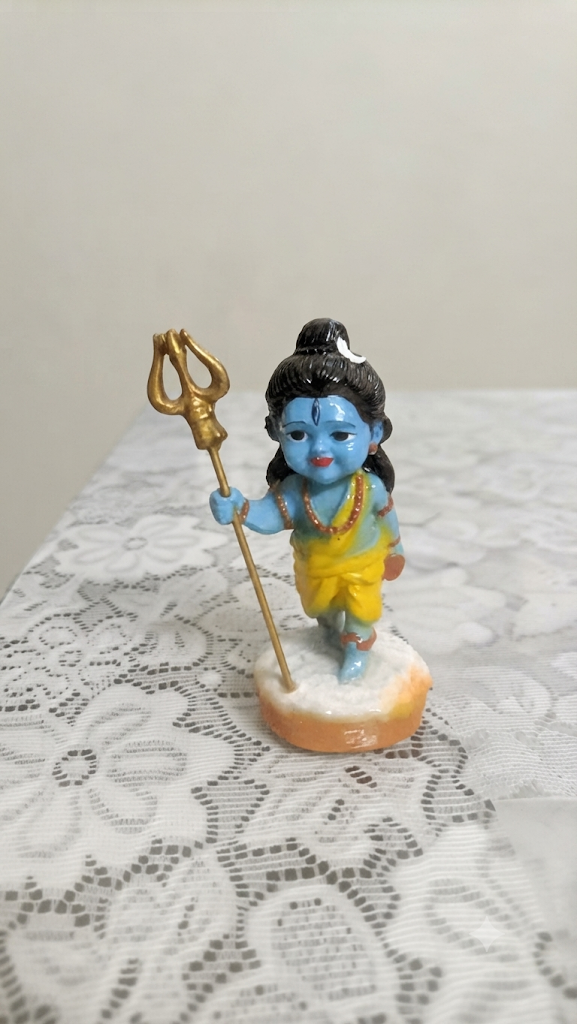
- A beautiful Bal Roop Shiva idol for ₹250
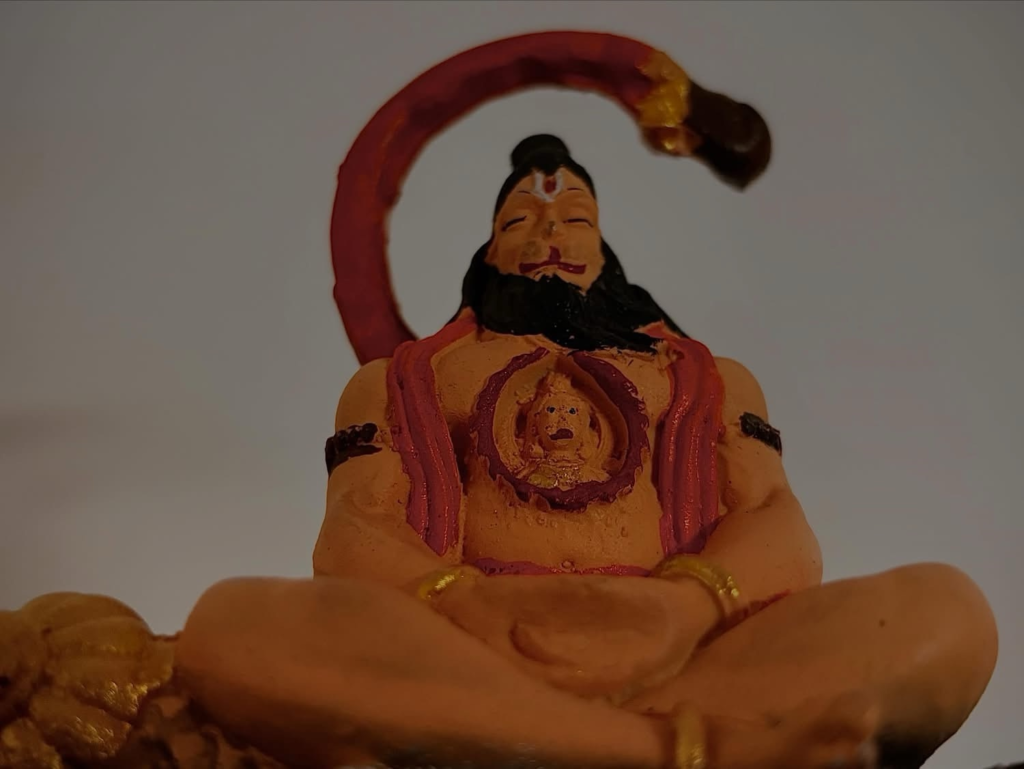
- A Hanuman Ji statue for ₹300
Almost every vendor accepted UPI payments, while cash remained equally convenient. Card payments, however, were uncommon among smaller roadside shops.
One thing I would strongly advise is to be cautious while buying religious items like Rudraksha beads.
Many vendors claim to sell original Rudraksha, but unless you’re purchasing from a trusted source, it’s difficult to verify authenticity.
A little caution can save you from unnecessary disappointment later.
Returning to Delhi
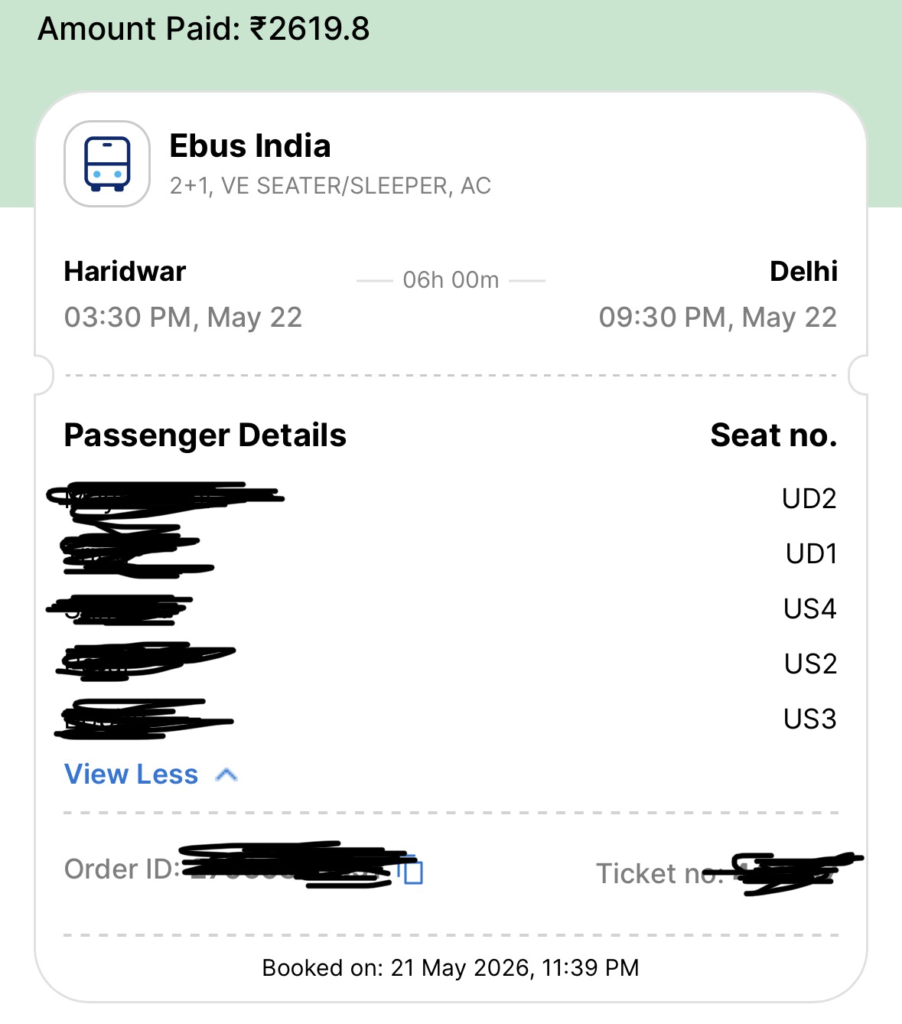
Our return journey was with Ebus India, departing from Haridwar in the afternoon.
Just like the onward trip, the bus journey was smooth and comfortable.
By the time we reached ISBT Kashmere Gate, Delhi Metro was still operational, making our journey home much easier.
After reaching Rohini Sector 18–19 Metro Station, I booked a Rapido e-rickshaw for ₹40 because I was carrying luggage. On normal days, I would probably have booked a bike instead.
Within a short time, we were back home.
The trip had officially ended.
But the memories certainly hadn’t.
Looking Back at the Journey

When I think about this trip today, I don’t remember only the famous attractions.
I remember reaching Rishikesh before sunrise after an overnight journey.
I remember the peaceful atmosphere at Neelkanth Mahadev Temple, the refreshing water at Neergarh Waterfall, the spiritual energy of Triveni Ghat and the calming night at Janki Setu.
I remember laughing with my group while walking for kilometers because traffic left us with no transport.
I remember the mountain roads, the local conversations, the shared autos, the market bargaining, and even the small challenges that became part of the story.
That’s what made this journey memorable.
Not because everything went perfectly, but because every experience, whether comfortable or challenging, became part of an unforgettable adventure.
Travel isn’t about collecting places on a map. It’s about collecting moments you’ll smile at years later.
Is a 2-day Rishikesh trip from Delhi worth it?
Yes. A well-planned two-day trip is enough to experience Rishikesh’s spiritual, natural, and cultural side. If you start early, avoid peak traffic hours and focus on quality experiences instead of rushing to every attraction, two days can be surprisingly fulfilling.
Our Accommodation Experience in Tapovan, Rishikesh
Choosing the right place to stay can completely change your Rishikesh experience. Instead of booking a hotel online before arriving, we decided to search for a room after reaching Tapovan. While this approach may not suit everyone, it worked well for us because we were traveling during a period when room availability wasn’t a major concern.
After asking a few locals, we found a spacious budget hotel on the street opposite the SBI Bank branch in Tapovan. The hotel name unfortunately slipped from my memory, but the location turned out to be extremely convenient for exploring nearby attractions.
One advantage of booking offline was the opportunity to negotiate. We managed to get a room for ₹2,300 for all five travellers, including two extra mattresses. Please don’t consider this a fixed market price, as accommodation costs vary depending on the season, weekends, festivals, and your negotiation skills.
Our Honest Hotel Review
Instead of giving a simple rating, here’s what we genuinely experienced.
| Category | Our Experience |
|---|---|
| Location | ⭐⭐⭐⭐⭐ Excellent |
| Room Size | ⭐⭐⭐⭐⭐ Spacious |
| Cleanliness | ⭐⭐⭐☆☆ Average |
| Staff Behaviour | ⭐⭐⭐⭐⭐ Very Helpful |
| Wi-Fi | ⭐⭐⭐⭐☆ Good |
| Washroom | ⭐⭐⭐⭐☆ Clean |
| Hot Water | ✅ Geyser Available |
| Lift | ✅ Available |
| Parking | ❌ Not Available |
| Food Service | ❌ Not Available |
The room itself was surprisingly spacious. Even with five people, we never felt cramped. There was enough space for sleeping, storing luggage, sitting together and moving around comfortably.
The cleanliness wasn’t luxury-hotel level, but it was acceptable for a budget stay. The staff members were polite, cooperative and available whenever we needed assistance.
Should You Book Online or Offline?
This is one of the questions many travellers ask before visiting Rishikesh.
Based on my experience, there isn’t a single correct answer.
Book Online If:
- You’re travelling during weekends or festivals.
- You’re arriving late at night.
- You don’t want to spend time searching for hotels.
- You have elderly family members or children.
Consider Booking Offline If:
- You’re traveling during a normal season.
- You’re comfortable negotiating prices.
- You want to inspect the room before paying.
- You’re looking for better value for money.
Personally, I prefer seeing the room with my own eyes before making payment. Online photographs don’t always represent the actual condition of the property. While many hotels are honest, some images can make rooms appear much better than they really are.
That said, online booking definitely provides peace of mind during peak tourist seasons when finding accommodation after arrival may become difficult.
Is Tapovan a Good Area to Stay?
In my opinion, yes.
Tapovan offered us a good balance between accessibility, restaurants, cafés, local transport, and sightseeing.
Shared autos, rental scooties, cafés, and local shops were all within walking distance, making it a practical base for exploring the city.
However, if you’re traveling in your own car, be prepared for narrow streets and limited parking. Many hotels in Tapovan are located in compact lanes where parking can become challenging, especially during busy tourist periods.
If you’re comfortable using local transport or renting a scooter, Tapovan becomes an even better choice because you avoid worrying about parking altogether.
Who Should Stay Where?
Based on what we observed during our trip:
- Budget travelers and students: Tapovan hotels offer excellent value.
- Nature lovers: Consider camps around Shivpuri for a quieter environment.
- Adventure enthusiasts: Staying closer to Shivpuri can reduce travel time for activities like river rafting.
- Families and couples: Tapovan provides a good mix of convenience, restaurants, and connectivity.
There’s no single “best” location in Rishikesh—it depends on what kind of trip you’re planning.
My Accommodation Tips for First-Time Visitors
If I visit Rishikesh again, I’ll probably follow these same principles:
- Reach early if you plan to search for hotels offline.
- Don’t book the first room you see—compare at least two or three options.
- Always inspect the washroom, mattress, and hot water before making payment.
- Ask about Wi-Fi, power backup, and check-out timings in advance.
- If you’re driving your own vehicle, confirm parking availability beforehand.
- During peak season, pre-booking is the safer option.
Where should first-time visitors stay in Rishikesh?
For most travellers, Tapovan is one of the best areas to stay because it offers good connectivity, plenty of restaurants, easy access to local transport, and is close to many popular attractions. Adventure lovers can also consider Shivpuri, while those seeking quieter surroundings may prefer riverside camps.
Food Experience in Rishikesh: What We Ate, What We Liked & What I’d Recommend
One thing I realised during this trip is that travelling isn’t always about finding the “best” restaurant. Sometimes, it’s simply about eating wherever you happen to be after hours of exploring.
Unlike many travel guides that recommend dozens of cafés without actually visiting them, I only want to talk about the places and meals we genuinely experienced.
Overall, we spent around ₹5,000–₹6,000 on food for our group of five throughout the two-day trip. The budget included breakfast, lunch, dinner, snacks, beverages and refreshments.
Breakfast After Faith Comes First
Our first breakfast wasn’t at a café.
It was after completing our darshan at Neelkanth Mahadev Temple.
This wasn’t because breakfast wasn’t available earlier—it was simply our personal religious belief. We preferred eating only after offering prayers at the temple.
That said, I wouldn’t recommend everyone follow the same approach.
If you’re prone to motion sickness, travelling on an empty stomach through the winding roads to Neelkanth Mahadev Temple may not be the best idea. Looking back, skipping breakfast may have contributed to her discomfort.
So unless it’s a personal religious preference, having a light breakfast before starting the mountain journey is a smarter choice.
Around the temple, we enjoyed fresh coconut water, shikanji, fruit chaat and a few local snacks before continuing our journey.
The Famous Mountain Meal: Maggi at Neergarh Waterfall
If you’ve travelled through the hills of North India, you probably already know what’s coming.
Maggi.
After reaching Neergarh Waterfall, we discovered that food choices were extremely limited.
Maggi was practically the main meal available, so naturally, that’s what we ordered.
And honestly…
Sometimes Maggi tastes better beside a waterfall than at any restaurant.
Whether it’s because of the weather, the surroundings or simply the hunger after trekking, it became one of those small moments that made the trip memorable.
Lunch: Simple North Indian Food That Hit the Spot
After returning to the hotel and taking some rest, we ordered lunch.
Our meal included:
- Shahi Paneer
- Dal Makhani
- Naan
- Fresh Salads
It wasn’t a luxury dining experience, nor was it something extraordinary.
But after an active morning filled with travelling, temple visits and waterfall exploration, it was exactly what we needed.
Sometimes simple food is the most satisfying food.
Dinner Near Tapovan
After spending the evening at Triveni Ghat and Janki Setu, we had dinner at a South Indian restaurant near SBI Tapovan.
If I judge purely on taste, I’d say it was average.
However, where the restaurant impressed us was:
- Quick service
- Hygienic environment
- Freshly prepared food
- Clean seating
When you’ve spent an entire day walking, sightseeing and sitting in traffic, good service often matters more than gourmet flavours.
Our Final Breakfast Before Leaving
On our second morning, after checking out of the hotel, we had breakfast at a large roadside tea stall.
Calling it just a “tea stall” would actually be unfair.
It functioned more like a small local restaurant, serving fresh breakfast with quick service. It was a simple yet satisfying way to begin our journey towards Haridwar.
After reaching Haridwar, we skipped a proper lunch because our return bus was approaching.
However, if you’re traveling from the same pickup point near Shri Kashyap Samaj Ashram, you’ll find restaurants nearby where you can comfortably have a meal before boarding your bus.
Was Food Expensive?
Not really.
For five people, spending around ₹5,000–₹6,000 over two days—including meals, snacks and drinks—felt reasonable.
Of course, your budget can vary depending on where you choose to eat.
Riverside cafés and premium restaurants will naturally cost more than local eateries, but budget-friendly options are available throughout Tapovan and nearby areas.
Restaurants Still on My Wishlist
Although we couldn’t visit every popular restaurant, these places remain on my list for the next trip based on their reputation among travellers:
- Anna’s Mess
- Chotiwala
- Ganga View Café
- Tattv Café
If you have an extra day in Rishikesh, these restaurants are worth considering while planning your itinerary.
My Food Tips for First-Time Visitors
After completing this trip, these are the tips I’d personally give anyone visiting Rishikesh:
- Don’t skip breakfast before traveling on mountain roads.
- Carry your own water bottle, especially during summer.
- Keep some light snacks in your backpack for long sightseeing days.
- Be open to trying local eateries instead of searching only for famous restaurants.
- During peak lunch and dinner hours, popular cafés can become crowded, so a little patience helps.
Is vegetarian food easily available in Rishikesh?
Yes. Rishikesh is one of the easiest destinations in India for vegetarian travelers. You’ll find everything from simple local meals and roadside eateries to cafés serving Indian, South Indian, and international vegetarian dishes. Budget-friendly options are available across Tapovan, Ram Jhula and nearby tourist areas.
Shopping in Rishikesh & Haridwar: What We Bought, Bargaining Tips & What to Avoid
Shopping wasn’t the primary purpose of our trip, but like most travellers, we couldn’t resist taking back a few souvenirs and memories from Rishikesh and Haridwar.
Instead of spending hours inside shops, we explored the local markets while walking through the city. These markets are full of religious items, handicrafts, clothing, accessories, and small souvenirs that beautifully represent the culture of Uttarakhand.
If you enjoy local street shopping more than expensive malls, you’ll definitely enjoy wandering through these markets.
Markets We Explored
During our trip, we visited:
- Neelkanth Mahadev Temple Market
- Haridwar Market near the Mansa Devi Ropeway entrance
Although we also walked through areas around Tapovan and the suspension bridges, most of our shopping happened at these two locations.
Both markets were lively, colorful, and filled with tourists from different parts of the country.
What We Bought
We didn’t go on a massive shopping spree.
Instead, we bought a few meaningful items that reminded us of the trip.
Sunglasses
The first purchase was actually a practical one.
The afternoon sunlight during our trip was intense, making it uncomfortable to keep our eyes open while walking.
We purchased sunglasses for everyone in our group for around ₹200 each, and honestly, they became one of the most useful purchases of the entire journey.
Sometimes the best souvenir is the one that actually makes your trip easier.
Religious Souvenirs
We also purchased:
- Bal Roop Shiva Idol – ₹250
- Hanuman Ji Statue – ₹300
Rather than buying expensive decorative items, we preferred bringing home something that carried spiritual significance and reminded us of the places we had visited.
Bargaining is Completely Normal
One thing you’ll quickly notice while shopping in local markets is that most prices aren’t fixed.
Vendors expect customers to negotiate.
That doesn’t mean you should bargain aggressively or disrespectfully.
A calm, polite conversation usually works much better.
During our experience, an item initially quoted at around ₹300 could often be negotiated down to ₹150–₹200, depending on the product and the seller.
Of course, every situation is different, so don’t expect every negotiation to end the same way.
Remember that these local vendors earn their livelihood through these sales. Bargain respectfully rather than trying to reduce every item to the lowest possible price.
Payment Methods
Shopping was very convenient because most vendors accepted multiple payment options.
Here’s what we observed:
- ✅ UPI – Accepted almost everywhere.
- ✅ Cash – Always accepted.
- ⚠️ Cards – Usually accepted only at larger shops and restaurants. Small street vendors generally don’t have card machines.
If you’re visiting, keeping some cash along with UPI is probably the best combination.
One Thing I’d Avoid Buying
If there’s one purchase I’d ask travellers to be careful about, it’s Rudraksha beads.
Many roadside vendors claim they’re selling original Rudraksha.
That doesn’t necessarily mean they’re genuine.
Unless you’re buying from a trusted seller with proper knowledge and credibility, avoid making expensive purchases based solely on verbal claims.
It’s always better to buy authentic religious items from reliable sources rather than regretting the purchase later.
How Was the Shopping Experience?
Like every popular tourist destination, the markets were busy and occasionally crowded.
However, we never felt unsafe.
My only suggestion is simple:
Don’t become irritated over small accidental bumps in crowded lanes.
Thousands of visitors walk through these markets every day, so occasional contact is almost unavoidable.
A little patience and understanding make the shopping experience much more enjoyable for everyone.
Shopping Tips for First-Time Visitors
Based on our experience, here are a few suggestions:
- Compare prices at two or three shops before buying.
- Bargain politely instead of aggressively.
- Carry both UPI and some cash.
- Don’t buy expensive Rudraksha or gemstones without proper verification.
- If you’re shopping during the afternoon, wear sunglasses—they genuinely make exploring the markets more comfortable.
- Buy only what you’ll actually value after returning home instead of collecting unnecessary souvenirs.
Is shopping in Rishikesh worth it?
Yes. Rishikesh and nearby Haridwar offer excellent local markets where you can buy religious souvenirs, handicrafts, accessories, clothing and small gifts. Bargaining is common in many local shops, UPI is widely accepted, and prices are generally budget-friendly. Just be cautious while purchasing expensive religious items like Rudraksha from unverified vendors.
Add these photos in this section:
- ✅ Shiva idol
- ✅ Hanuman Ji statue
- ✅ Market photographs (when you upload them later)
Weather & Packing Experience: What We Packed, What Helped & What We’d Do Differently
Packing for Rishikesh isn’t about carrying more luggage—it’s about carrying the right luggage.
Looking back at our trip, there were a few things that made traveling much easier and a few things we packed but barely used. If you’re planning a similar two-day trip, learning from our experience can save you unnecessary weight, money, and inconvenience.
How Was the Weather During Our Trip?
We visited during May, when Rishikesh experienced mostly sunny weather with moderate to high daytime temperatures.
The afternoons were noticeably hot, especially while walking through markets, suspension bridges, and open roads. Thankfully, the evenings became much more pleasant, and taking a dip in the Ganga or simply spending time near the river felt incredibly refreshing.
The difference between day and night temperatures wasn’t extreme, but mornings and evenings were definitely more comfortable for sightseeing.
That’s one of the biggest reasons I’d recommend planning outdoor activities during the early hours instead of the afternoon.
The Items We Were Glad We Packed
Insulated Water Bottles
Without a doubt, these were among the most useful things we carried.
We had three insulated water bottles, and they kept our water chilled for several hours despite the summer heat.
Instead of repeatedly buying bottled water, we simply refilled them whenever possible.
If you’re traveling during summer, don’t underestimate how valuable a good insulated bottle can be.
Sunglasses
Initially, sunglasses weren’t even on our priority list.
But after experiencing the harsh afternoon sunlight, they became one of our most useful purchases.
The bright sunlight reflected from roads, bridges and open areas can become uncomfortable after several hours of walking.
Whether you carry them from home or buy them locally like we did, I’d strongly recommend having a pair.
Power Bank
Your phone does much more than clicking photographs during a trip.
You’ll constantly use:
- Google Maps
- Camera
- UPI payments
- Hotel bookings
- Bus tickets
- Calls
- Internet browsing
All of that drains your battery surprisingly fast.
A fully charged power bank removes one unnecessary travel worry.
Identity Proof
Every traveller should carry a valid government ID.
Hotels, camps and many accommodations require identity verification during check-in.
We carried our Aadhaar cards, making the check-in process smooth.
Polybags (Unexpected Heroes)
This wasn’t something we planned properly.
After visiting waterfalls and spending time around the river, we suddenly realised how difficult it becomes to manage wet clothes inside a normal travel bag.
Buying a few polybags solved the problem temporarily, but next time I’d definitely carry waterproof storage bags from home.
It sounds like a small thing until your entire backpack starts getting wet.
Clothes We Packed
Since ours was a 2-day trip, this is what I carried:
- 4 T-shirts
- 2 Pants (because pants can easily be reused)
- 1 Capri for overnight bus travel
- 4 Shorts (I intentionally packed extra in case someone in the group needed one)
- 4 Vests
- 4 Undergarments
Looking back, this quantity worked well without making my backpack excessively heavy.
Footwear
I carried:
- One pair of shoes
- One pair of slippers
If you’re planning to visit places like Neergarh Waterfall or trek around Neelkanth Mahadev Temple, comfortable shoes with good grip are far more important than fashionable footwear.
Medicines
Fortunately, we didn’t face any serious medical emergencies during the trip.
However, one important incident taught us a valuable lesson.
While traveling through the winding mountain roads towards Neelkanth Mahadev Temple, my friend experienced motion sickness and vomited for a few minutes after reaching the drop point.
One possible reason was that she had skipped breakfast and only drank coconut water before the journey, while the rest of us had eaten something light.
Mountain roads with continuous sharp turns can trigger motion sickness, especially on an empty stomach.
If you’re prone to travel sickness, carry the medicines recommended by your doctor, have a light meal before the journey and keep yourself hydrated.
Thankfully, after some rest, she recovered well and continued enjoying the rest of the trip.
What I Wish I Had Packed
If I repeat this trip tomorrow, I’d definitely carry:
- Waterproof storage bags
- A lightweight rain cover for my backpack
- A slightly larger quick-dry towel
These aren’t expensive additions, but they make traveling around rivers and waterfalls much easier.
What I Packed but Hardly Used
One mistake I made was carrying too many skincare products.
I packed:
- Face scrub
- Detan products
- Multiple skincare items
In reality, I barely used them.
During a busy sightseeing trip, you’re constantly outdoors, so repeatedly washing your face with detan products doesn’t really make much sense.
A simple face wash is more than enough.
Everything else simply increased my luggage weight.
Seasonal Packing Advice
Summer
- Prefer lightweight cotton clothes.
- Carry sunglasses.
- Use sunscreen every few hours if you’re outdoors for long periods.
- Stay hydrated throughout the day.
Winter
Winters in Rishikesh are noticeably colder than nearby plains such as Roorkee or Meerut.
Carry warm layers, especially if you’re traveling early in the morning or late at night.
Monsoon
Personally, I wouldn’t recommend planning a mountain trip during the peak monsoon season.
Heavy rainfall can lead to:
- Landslides
- Road closures
- Traffic disruptions
- Flash floods
The tragic 2013 Kedarnath floods remain a reminder of how unpredictable mountain weather can become.
If travelling during monsoon is unavoidable, carry:
- Raincoat
- Waterproof shoes
- Waterproof backpack cover
- Extra power bank
- Fully charged phone
- Offline maps
- Emergency contacts
Safety should always come before sightseeing.
My Packing Checklist for a 2-Day Rishikesh Trip
Before leaving home, I’d recommend checking these essentials:
- ✅ Comfortable cotton clothes
- ✅ Trekking or sports shoes
- ✅ Slippers
- ✅ Sunglasses
- ✅ Sunscreen
- ✅ Insulated water bottle
- ✅ Power bank
- ✅ Government ID
- ✅ Basic medicines
- ✅ Waterproof bags for wet clothes
- ✅ Phone charger
- ✅ Small towel
pro Tip
For a comfortable two-day trip, pack lightweight cotton clothes, comfortable trekking shoes, sunglasses, sunscreen, an insulated water bottle, a power bank, a valid ID, basic medicines, and waterproof bags for wet clothes. Avoid overpacking, especially if you plan to trek or explore waterfalls.
Mistakes to Avoid in Rishikesh (Based on Our Experience)
Every destination teaches you something.
Some lessons make your trip easier.
Others are learnt the hard way.
After spending two days exploring Rishikesh and Haridwar, these are the practical tips I genuinely wish someone had shared with me before the journey.
1. Start Your Day Early
If there’s only one piece of advice I can give, it’s this:
Wake up early.
Rishikesh looks completely different during the early hours.
The roads are comparatively empty, temperatures are pleasant, famous attractions are less crowded and travelling between places becomes much easier.
Whether it’s Neelkanth Mahadev Temple, Bajrang Setu or Ram Jhula, mornings almost always offer a better experience than afternoons.
2. Don’t Underestimate Rishikesh Traffic
This surprised us more than anything else.
Most YouTube videos and travel blogs show beautiful drone shots, cafés and river rafting.
Very few prepare you for the city’s traffic.
During peak hours, travelling just a few kilometres can easily take over an hour.
Plan your itinerary accordingly.
Don’t keep back-to-back attractions with unrealistic timings.
Leave enough buffer time between destinations.
Your trip will immediately become far less stressful.
3. Rent a Scooty If You Can
Looking back, renting a scooty would probably have saved us several hours.
Shared autos are economical.
Private taxis are comfortable.
But a rental scooty offers something both lack.
Freedom.
If you’re comfortable riding in hilly areas and have a valid driving licence, renting a scooty can help you explore much more efficiently while saving money on repeated local transport.
4. Don’t Depend Completely on Ola, Uber or Rapido
We personally tried booking app-based rides multiple times.
Most requests were either ignored or never accepted.
This doesn’t mean they never work.
You might get lucky.
But don’t plan your entire itinerary assuming they’ll always be available.
Shared autos, local taxis and rental scooters remain far more reliable options in many parts of Rishikesh.
5. Google Maps Isn’t Always Right
Inside Tapovan and other city areas, Google Maps works reasonably well.
However, once you begin travelling towards mountain roads like Neelkanth Mahadev Temple, things become less predictable.
Road diversions, temporary closures and weather-related disruptions aren’t always reflected immediately.
If you’re driving your own vehicle, don’t hesitate to ask local people for confirmation.
Sometimes local advice is more accurate than digital navigation.
6. Expect Limited Mobile Network in the Hills
During our journey towards Neelkanth Mahadev Temple, mobile connectivity became extremely weak in several stretches.
Don’t panic if your internet suddenly disappears.
Download offline maps before starting your journey and inform your family beforehand if you’re heading towards remote areas.
7. Public Washrooms Aren’t Everywhere
Public washrooms were available at places like Neelkanth Mahadev Temple, but they weren’t common throughout the trip.
Whenever you find clean washroom facilities at major attractions or your hotel, it’s better to use them instead of assuming you’ll easily find another one later.
8. Visit Bridges During Sunrise or Sunset
If photography is important to you, avoid visiting suspension bridges during the harsh afternoon sun.
Instead:
- Sunrise offers softer light and fewer people.
- Sunset creates beautiful golden reflections.
- Night gives Janki Setu a completely different personality with its lighting.
Every time of the day creates a different mood.
9. Respect Local Culture
One thing we genuinely appreciated throughout the trip was how welcoming the local people were. Before travelling, we had heard stories about occasional conflicts between tourists and locals. During our own visit, however, we experienced exactly the opposite.
Our observation was simple.
Most problems seem to happen when visitors ignore local customs, disturb religious places, or invade people’s privacy. Treat the city with respect, and chances are you’ll receive the same respect in return.
10. Don’t Try to Cover Everything
This is probably the biggest mistake first-time visitors make. People prepare long checklists filled with twenty attractions in two days. Then they spend the entire trip traveling instead of enjoying.
If you ask me today, I’d recommend something completely different.
Visit fewer places.
Spend more time at each one.
Let yourself sit beside the river.
Walk through local streets.
Watch the city instead of constantly rushing to the next location.
The memories you’ll create will be far more meaningful.
Small Things That Made Our Trip Better
Sometimes, the smallest decisions made the biggest difference.
- Starting our temple visit early saved hours of waiting.
- Using shared local transport helped us experience the city’s everyday life.
- Carrying insulated water bottles kept us refreshed throughout the day.
- Negotiating hotel prices saved us money.
- Buying sunglasses turned out to be one of our smartest purchases.
- Taking time to simply sit at Janki Setu became one of our favourite memories.
Travel is often about these little moments rather than grand plans.
Mistakes I’d Avoid on My Next Rishikesh Trip
If I visit Rishikesh again, here’s what I’d do differently:
- I would rent a scooty.
- I would carry waterproof storage bags.
- I would pack fewer unnecessary skincare products.
- I would keep a larger buffer for traffic delays.
- I would leave popular attractions before peak congestion.
- I would spend even more time exploring on foot instead of rushing between places.
Every trip teaches you something.
This one certainly taught me a lot.
What mistakes should first-time visitors avoid in Rishikesh?
Avoid planning too many attractions in one day; don’t underestimate traffic; start sightseeing early, don’t rely entirely on app-based taxis; carry light luggage; download offline maps before visiting hill areas; and respect local culture and religious places. These small decisions can make your trip much smoother and more enjoyable.
One thing that surprised me the most wasn’t just Rishikesh’s breathtaking beauty—it was how much better the trip became once we stopped chasing every attraction and started enjoying each moment.
Frequently Asked Questions (FAQs)
1. Is a 2-day trip enough for Rishikesh?
Yes, if you plan it well. We covered Neelkanth Mahadev Temple, Neergarh Waterfall, Triveni Ghat, Janki Setu, Ram Jhula, Bajrang Setu and Haridwar comfortably in two days. Instead of rushing to every attraction, focus on quality experiences.
2. What is the best time to visit Rishikesh?
For most travellers, October to March offers pleasant weather. However, we visited in May, and although afternoons were hot, early mornings and evenings were comfortable. During summer, start sightseeing early to avoid both heat and traffic.
3. Is Rishikesh safe for families, couples, and solo travelers?
From our experience, yes. We found the city clean, welcoming, and tourist-friendly. Like any destination, avoid isolated areas late at night and respect local customs and religious places.
4. How much did your 2-day Rishikesh trip cost?
Our expenses included transportation, accommodation, food, local transport, shopping, and sightseeing. The total cost depends on your travel style, but budget travelers can comfortably plan an affordable trip using shared transport and budget hotels.
5. Which bus did you travel in from Delhi to Rishikesh?
We travelled by Nuego Electric Bus from Delhi to Rishikesh and returned from Haridwar to Delhi by Ebus India. Both journeys were comfortable and punctual and offered charging points along with onboard washrooms.
6. Is an electric bus a good option for traveling to Rishikesh?
Absolutely. Our overnight electric bus journey was smooth, comfortable, and economical. Overnight travel also helped us save daytime sightseeing hours.
7. Is Neelkanth Mahadev Temple worth visiting?
Without any doubt.
It was the highlight of our entire trip.
The peaceful atmosphere, scenic mountain roads, and spiritual experience made it our highest-rated destination.
8. What is the entry fee for Neergarh Waterfall?
During our visit, the entry fee was ₹50 per person.
9. Should I rent a scooty in Rishikesh?
If you’re comfortable riding in hilly areas and have a valid driver’s license, yes.
Looking back, renting a scooty would have saved us several hours lost in traffic.
10. Is local transport easily available in Rishikesh?
Yes.
Shared autos, local taxis and rental scooters are widely available.
However, don’t depend entirely on Ola, Uber, or Rapido because availability can be inconsistent.
11. Is Google Maps reliable in Rishikesh?
Inside the city, it works reasonably well.
On mountain roads, however, temporary diversions and landslides may not always appear immediately, so local advice can be more reliable.
12. Is mobile network available everywhere?
No.
We experienced poor network connectivity while travelling towards Neelkanth Mahadev Temple.
Downloading offline maps beforehand is a good idea.
13. What should I pack for a Rishikesh trip?
Carry lightweight clothes, trekking shoes, sunglasses, sunscreen, a power bank, insulated water bottles, waterproof bags for wet clothes, a valid ID and basic medicines.
Avoid overpacking if you plan to trek.
14. Is vegetarian food easily available in Rishikesh?
Yes.
Rishikesh has countless vegetarian restaurants, cafés and roadside eateries serving North Indian, South Indian and other cuisines.
Finding vegetarian food is never a problem.
15. Is bargaining common in local markets?
Yes.
Most local market prices are negotiable.
Be polite and respectful while bargaining because these small businesses depend on tourism for their livelihood.
16. What should I avoid buying in Rishikesh?
Be cautious while purchasing expensive Rudraksha beads or gemstones from roadside vendors unless you completely trust the seller.
17. When should I attend the Triveni Ghat Ganga Aarti?
Reach at least one to one-and-a-half hours before the Aarti if you want a good viewing spot, especially during weekends and holidays.
18. Which place was your favorite?
If I had to choose only one, it would be Neelkanth Mahadev Temple.
The mountain scenery, peaceful environment, and spiritual experience made it unforgettable.
However, Janki Setu at night was easily the most calming place we visited.
19. What surprised you the most about Rishikesh?
The biggest surprise wasn’t just the city’s beauty.
It was the traffic.
Most travel guides don’t prepare visitors for how much time traffic can consume during busy hours.
Planning around peak traffic made a huge difference to our experience.
20. Would you visit Rishikesh again?
Absolutely.
Not because I couldn’t finish my itinerary, but because Rishikesh isn’t a destination you simply “complete.”
Every visit offers a different experience.
Next time, I’d spend even more time walking through the city, exploring cafés, discovering quieter places and simply enjoying the peaceful atmosphere instead of trying to cover more attractions.
Concluding my journey
If you’ve read this guide from beginning to end, you’ll probably notice one thing. This isn’t a list of attractions copied from the internet
It’s the story of a real journey—complete with smooth moments, unexpected challenges, practical lessons and small experiences that made the trip memorable.
That’s exactly what I wanted this guide to be.
Whether you’re traveling with family, friends, your partner, or even solo, I hope this experience helps you plan a smoother, more enjoyable Rishikesh trip. You can read more such latest blogs on travel, latest tech, SEO, marketing ideas, etc., and also our interesting news explainers. Subscribe to our latest content today, and change the way you see the world.
If it saves you from even one common mistake—or helps you discover one memorable place a little earlier than I did—then writing this guide was worth it.
Don’t miss this – india trip planner
Before booking your bus, hotel, or itinerary, I recommend planning your budget and travel preferences in advance.
I personally built the India Trip Planner to make that process easier. It helps travelers estimate budgets, organize destinations, compare travel preferences, and prepare a practical itinerary before the trip even begins.
Instead of guessing your expenses or trying to manage everything manually, you can plan your trip in just a few steps and start your journey with much more confidence.
👉 Try the India Trip Planner: https://www.contentbymayank.com/india-trip-planner/
Pingback: Is SEO Still Worth It If AI Doesn’t Cite You? - ContentbyMayank
Pingback: Delhi Prayagraj Varanasi trip: Our 4-Day Spiritual Journey -ContentbyMayank